








The Philosophy of Form in Minimalist Design
Over a century ago, the Bauhaus movement championed geometric forms as the height of functional beauty, an idea that still shapes modern design. This principle is especially relevant for the technology we carry every day. Minimalism in tech accessories is not about owning less, but about deliberate curation. Every choice, from your laptop to your phone case, is an act of shaping your personal environment.
The rectangle is a symbol of clarity, order, and purpose. Its predictable, clean shape offers a sense of calm that contrasts with the visual chaos of many modern accessories. We can all recall seeing a phone case cluttered with loud patterns or logos that completely overshadow the device itself. Choosing a rectangle case aligns your iPhone with foundational design principles, turning it into a timeless object rather than a fleeting trend.
This commitment to intentionality is a core part of our story, where we believe accessories should complement, not complicate. The right case becomes the cornerstone of your tech ecosystem. It establishes a standard of geometric discipline that guides the selection of other items, leading to some of the most cohesive and clean tech setup ideas. It’s a choice that signals a preference for structure and quiet confidence.
Enhancing Device Aesthetics with Clean Lines
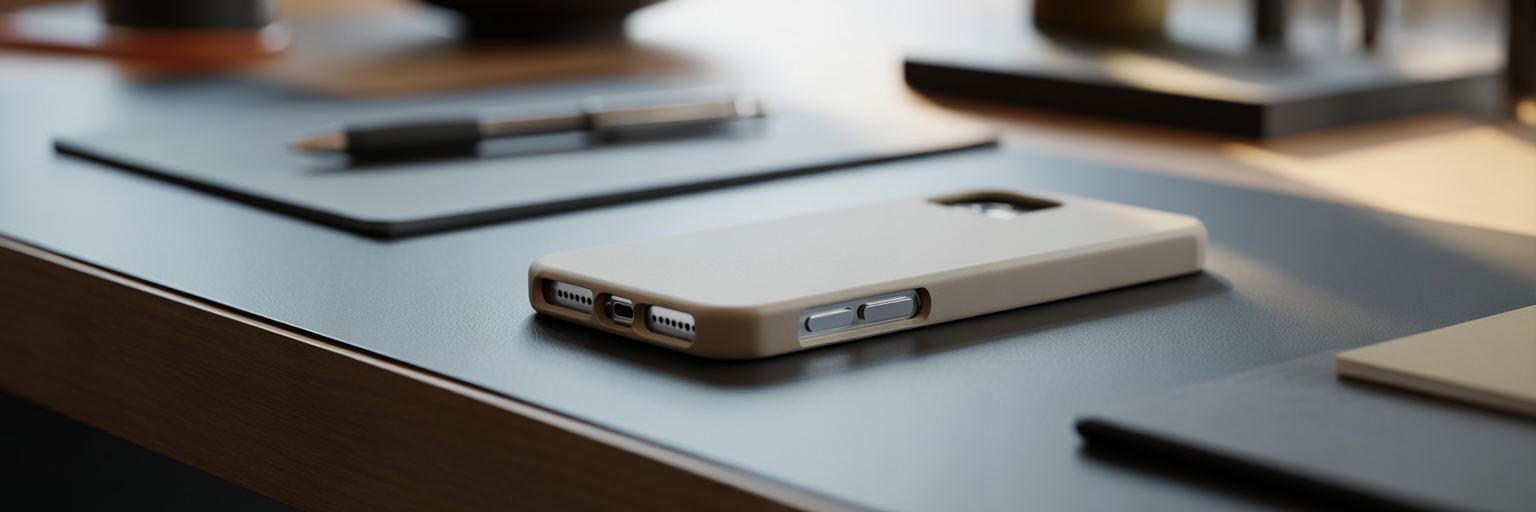
Moving from philosophy to the physical object, a rectangle case works in perfect synergy with the iPhone’s industrial design. Instead of hiding the phone, the case’s sharp, defined edges accentuate its inherent sleekness. The two become a single, unified object, where the boundary between phone and protector disappears. This creates a powerful minimalist phone case aesthetic that feels intentional and complete.
An ultra-slim profile is essential to this harmony. A well-designed slim geometric phone case preserves the device's intended ergonomics and lightweight feel. It becomes a natural extension of the phone, not a cumbersome addition that makes it awkward to hold or slip into a pocket. The difference is in the details, where superior craftsmanship becomes apparent.
These small points of precision are what separate an average case from an exceptional one:
- Precise Cutouts: Perfectly aligned openings for ports, speakers, and the camera are non-negotiable. They ensure full functionality without breaking the seamless silhouette.
- Responsive Buttons: Well-engineered button covers provide tactile feedback that feels just as satisfying as the phone's native controls.
- Perfectly Aligned Edges: The case edges must meet the screen with absolute precision, framing it cleanly without intrusion.
Collectively, these elements elevate the device, making it appear more refined and thoughtfully considered. For a tangible example of this synergy, our collection for the iPhone 15 Pro Max demonstrates how these principles come to life.
The Role of Colour and Material in a Cohesive Look
Beyond shape, the sensory aspects of a case—what you see and feel—are critical to achieving a cohesive look. A neutral and monochromatic colour palette of black, white, grey, or beige creates an immediate sense of harmony and sophistication. These tones allow the pure form of the rectangle iPhone cases and the device to remain the primary focus, free from distraction.
As highlighted by design resource Bookmarkify.io, material choice is fundamental to minimalist product design. Premium materials contribute to the experience. A matte-finish polymer, for instance, offers a soft, fingerprint-resistant touch that feels clean and understated. A fine-grain vegan leather, on the other hand, signals a quiet luxury iPhone case design without needing a loud logo. Texture also plays a key role. A non-reflective, matte surface absorbs light and reduces visual noise, reinforcing a calm and composed aesthetic.
The deliberate selection of both colour and material transforms a simple accessory into a key component of a curated collection. A piece like our solid neutral rectangle case exemplifies how these elements work together. This choice reflects a user's commitment to quality and aesthetic integrity, showing that every detail has been considered.
Why Minimalists Choose Geometry Over Ornament
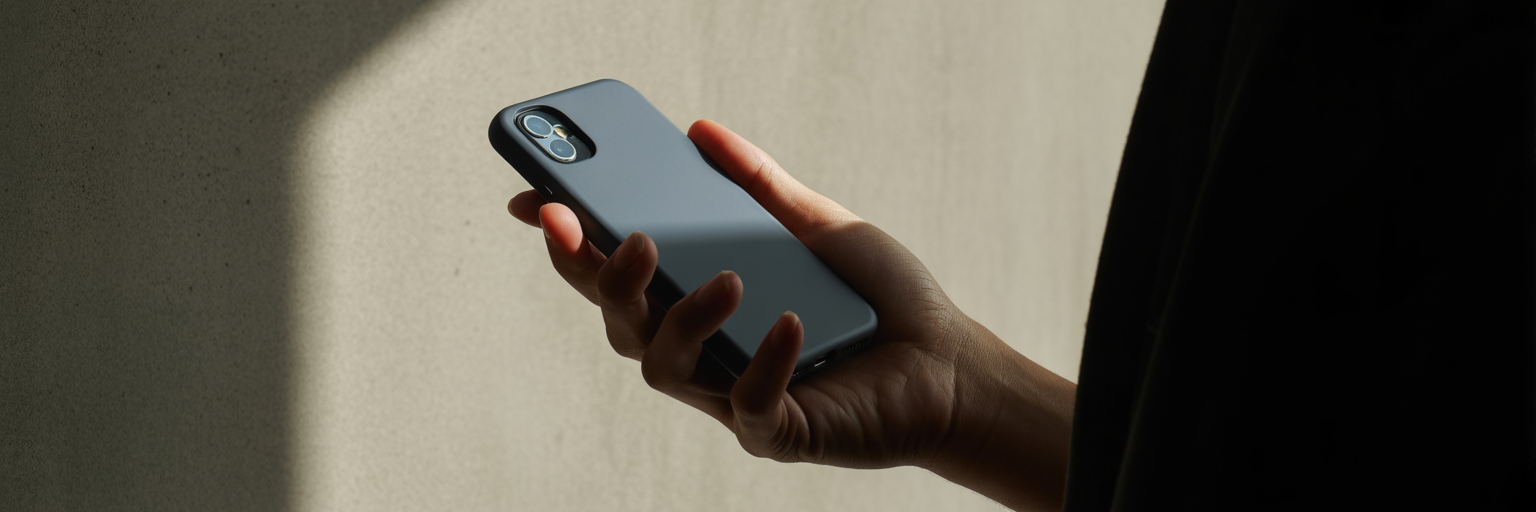
To understand the appeal of geometric design, consider the alternative. Ornate, heavily branded, or irregularly shaped cases often create visual noise, detracting from the iPhone's carefully engineered form. The minimalist mindset is different. The purpose of a case is to complement and enhance the device, serving as a quiet, confident frame for the technology within, not to be a loud statement piece on its own.
This preference is rooted in a deeper philosophy. Minimalists often choose geometry for reasons that go beyond appearance:
- A desire for a decluttered mental and physical space, where objects are calm and unobtrusive.
- A preference for items that serve a clear purpose without adding needless complexity.
- An appreciation for timeless forms over fleeting, decorative trends that quickly feel dated.
This deliberate decision is about choosing enduring function and form. For more articles exploring this design-conscious lifestyle, you can browse the pieces in The Style Edit. The following table clarifies the core differences in these two approaches.
| Attribute | Geometric Minimalism (Rectangle Cases) | Decorative Maximalism (Ornate Cases) |
|---|---|---|
| Visual Focus | Enhances the device's original design | Draws attention to the case itself |
| Design Philosophy | Form follows function; intentionality | Expression through ornamentation |
| Aesthetic Longevity | Timeless and enduring | Tied to fleeting trends |
| Device Synergy | Creates a single, cohesive object | Acts as a separate, decorative layer |
The Evolution of Functional Minimalism
There used to be a compromise: you could have a stylish, slim case or a protective one, but not both. That assumption is now outdated. Modern engineering and material science allow for significant drop protection within an exceptionally slim, geometric profile. This is the essence of "invisible" protection, where safety features are integrated so seamlessly they are hardly noticeable.
Subtly raised bezels around the screen and camera lens are a perfect example. They provide crucial defense against scratches and impacts without disrupting the case's clean lines. The use of innovative, shock-absorbent polymers makes it possible to create a case that is both lightweight and highly effective at absorbing impact. This proves that robust protection no longer requires bulk.
Modern rectangle iPhone cases represent the pinnacle of evolved design. They are not a compromise but a testament to how form and function can be perfectly unified. They offer peace of mind without sacrificing the minimalist aesthetic you have so carefully cultivated. These are the everyday essentials for the modern, design-conscious individual.


