






The Growing Need for a Secure Smartphone Grip
Since the introduction of the all-glass back with the iPhone X, smartphones have become stunningly beautiful and progressively more slippery. We have all felt that heart-stopping moment when a premium device starts to slide from our grasp. This design trend has created a very real, practical challenge for daily use. The anxiety of dropping a thousand-dollar phone has fundamentally shifted what people look for in an accessory. It is no longer just about aesthetics or minimal protection.
Consumers now prioritize tactile security and confidence in their hold. The demand for an iPhone case with good grip is a direct response to the sleek, but often precarious, nature of modern hardware. A phone's design might be a work of art, but if you are constantly worried about it slipping, that beauty becomes a source of stress. The ideal case, therefore, must do more than just protect from a fall. It needs to feel secure in your hand, turning a slippery object into a confident extension of yourself and preventing the drop from ever happening.
Essential Materials for a Non-Slip Experience

The foundation of a secure hold begins with the material. While a case’s shape contributes to comfort, its surface is what provides the friction needed to prevent slips. Different materials offer distinct tactile experiences, each with unique properties that contribute to a reliable grip. Understanding these differences is the first step toward finding a case that feels right in your hand.
The Role of Soft-Touch Silicone
Silicone is prized for its high surface friction, creating a reassuringly "sticky" feel without being adhesive. Its soft, almost warm texture is incredibly comfortable to hold for long periods, making it a top choice for users who prioritize both grip and feel. The inherent properties of a silicone iPhone case grip provide a secure hold that feels natural and effortless. For instance, a well-designed silicone rectangle case from our collection offers an ideal balance of pleasant softness and dependable friction, preventing the phone from sliding on surfaces or in your hand.
Rubberized Composites and TPU
Thermoplastic Polyurethane (TPU) and other rubberized composites offer a slightly different approach. While still flexible, they are generally firmer than silicone, providing excellent shock absorption. Their key advantage for grip is their moldability. Manufacturers can easily create deep textures, ribbed patterns, and other tactile features directly into the material. This allows for a more aggressive grip profile that is perfect for users who need maximum security in active situations. Unlike the uniform smoothness of silicone, TPU provides grip through engineered patterns.
Hybrid Constructions for Balanced Protection
Hybrid cases offer a clever solution by combining materials. Typically, they feature a hard polycarbonate back panel for scratch resistance and structural rigidity, paired with a softer TPU or silicone frame. This design concentrates the grippy material where it matters most: along the edges where your fingers make contact. The result is a non-slip phone case for iPhone that does not compromise on clarity or durability, giving you a secure hold without adding unnecessary bulk across the entire device.
| Material | Primary Grip Characteristic | Comfort Level | Primary Advantage |
|---|---|---|---|
| Soft-Touch Silicone | High surface friction | Very High (Soft, warm feel) | Excellent all-around grip and comfort |
| TPU (Thermoplastic Polyurethane) | Flexible with textured potential | High (Slightly firmer than silicone) | Durability and shock absorption |
| Rubberized Composites | Molded textures and patterns | Medium to High (Varies by texture) | Maximum grip through aggressive patterns |
| Hybrid (PC + TPU/Silicone) | Grip focused on the edges/frame | High (Hard back, soft sides) | Combines scratch resistance with secure hold |
Design Elements That Enhance Handling and Comfort
Beyond the raw materials, the physical shape of a case plays a significant role in how it feels to hold. A truly comfortable iPhone case is the result of deliberate ergonomic choices that work with the natural posture of your hand, not against it. This focus on user-centric design is a principle shared by professionals in other fields. For example, as noted by the design firm Modal Architecture, their contract administration services apply deep knowledge of form and function to ensure projects are not just built, but are built for human interaction and usability.
This same philosophy applies to case design, where subtle features can make a world of difference in daily handling. These elements transform a simple protective shell into a functional tool that reduces hand fatigue and inspires confidence.
- Ergonomic Contours: Instead of sharp, flat sides, look for cases with subtly curved or scalloped edges. These contours are designed to fit the natural curve of your fingers, allowing for a more relaxed grip and reducing the strain of one-handed use.
- Textured Patterns: Micro-textures, ribbed patterns, or dotted finishes along the sides create thousands of tiny friction points. This is especially effective for preventing the phone from twisting or slipping during movement. You can see a variety of these effective designs in our collection of pattern rectangle cases.
- Raised Bezels: The raised lips around the screen and camera are not just for protection. They also provide a tangible ridge for your fingers to brace against, offering an extra point of contact that helps prevent your hand from sliding off the device.
Integrating Functionality Without Compromise
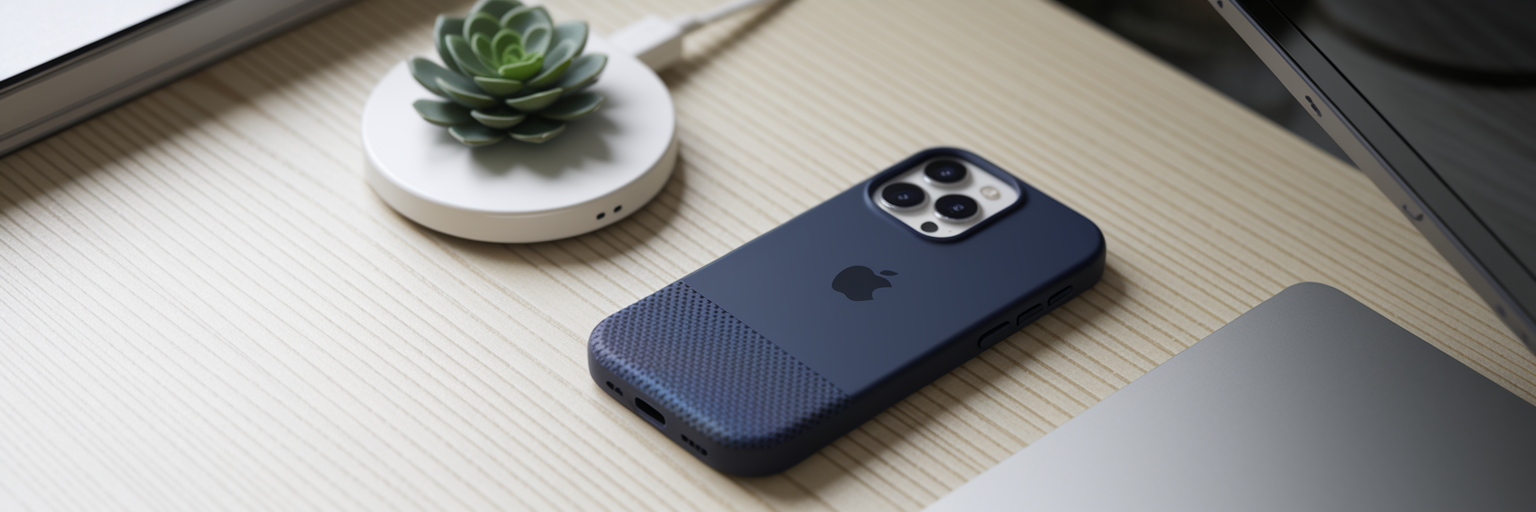
A common worry is that choosing a case for grip means sacrificing other essential features like slimness or wireless charging. In 2026, that is simply no longer the case. Modern case engineering has solved these trade-offs, allowing you to have a secure hold without giving up the functionality you depend on. The debate between a slim profile and a secure grip has been addressed by hybrid designs that keep the back of the case sleek while fortifying the edges with grippy materials.
More importantly, MagSafe compatibility is now a non-negotiable standard. You should not have to choose between a secure grip and the convenience of magnetic charging and accessories. As Engadget's 2025 review highlights, leading manufacturers have successfully integrated strong magnets into grippy cases without adding bulk or weakening the hold. This means a MagSafe compatible grip case is no longer a compromise. You can find excellent examples that deliver on this promise in our lineup of solid MagSafe rectangle cases.
Ultimately, a secure grip is the first and best line of defense. While drop protection ratings are important, the best protection is preventing the drop from happening in the first place. A case that feels secure in your hand dramatically reduces the chances of an accident, making it an active part of your device's safety system.
A Checklist for Your Ideal Grip Case
Choosing the right case comes down to a few key considerations that balance feel, form, and function. To simplify your decision, use this practical checklist to ensure you are getting a case that truly meets your needs for security and comfort. This is about finding an accessory that feels like a natural part of your device.
- Check the Material: Prioritize soft-touch silicone, TPU, or rubberized textures. Feel the material if you can, as this is the primary source of your non-slip experience.
- Examine the Design: Look for ergonomic edges, textured side patterns, and raised bezels. These physical features are designed to enhance handling and reduce hand fatigue.
- Confirm Key Features: Ensure it has strong MagSafe compatibility for seamless charging and accessory use. Do not settle for a case that compromises on modern standards.
After running through this list, consider your personal handling style. Do you often use your phone one-handed? Do you have smaller hands? Your answers will help you decide on the right level of texture and contour. The best rectangle iPhone cases are those that disappear in your hand, providing confidence without getting in the way. To find the perfect match based on these criteria, you can use our tool to find your perfect rectangle iPhone case and get a personalized recommendation.


