






The luxury market has reached a turning point. For years, aesthetics were enough, but today’s informed consumer asks for more. They want to know the story behind the product, demanding transparency and environmental responsibility. This shift has created a space for materials that are both beautiful and ethical. Mother of pearl, also known as nacre, perfectly bridges this gap. With a history stretching back centuries in jewellery and high-end decor, its appeal is timeless. But now, it re-emerges as a thoughtful choice for modern technology.
The New Standard for Premium Tech Accessories
The conversation around luxury tech accessories is changing. It is no longer just about protection or a brand logo. It is about personal expression and the values a product represents. Mother of pearl stands apart from the sea of mass-produced plastic and silicone. Its signature feature is a deep, shifting iridescence that catches light in a way that feels alive. This organic luster is a result of its microscopic crystalline structure, a complex natural process that is impossible to replicate synthetically.
Think of the uniform, predictable finish of a standard plastic case. Now contrast that with the subtle, unique patterns of nacre. Each piece tells its own story through its distinct swirls and colours. This inherent individuality means that no two cases are ever identical. Your accessory becomes a personal statement, not just another item off an assembly line. This unique beauty, where every pattern is one-of-a-kind, is something we celebrate in collections like our pearl rectangle case collection.
Choosing a mother of pearl accessory is a decision to carry something with history, character, and a connection to the natural world. It moves beyond simple functionality to become a piece of wearable art that reflects a commitment to both quality and substance.
The Material Science of a Greener Accessory
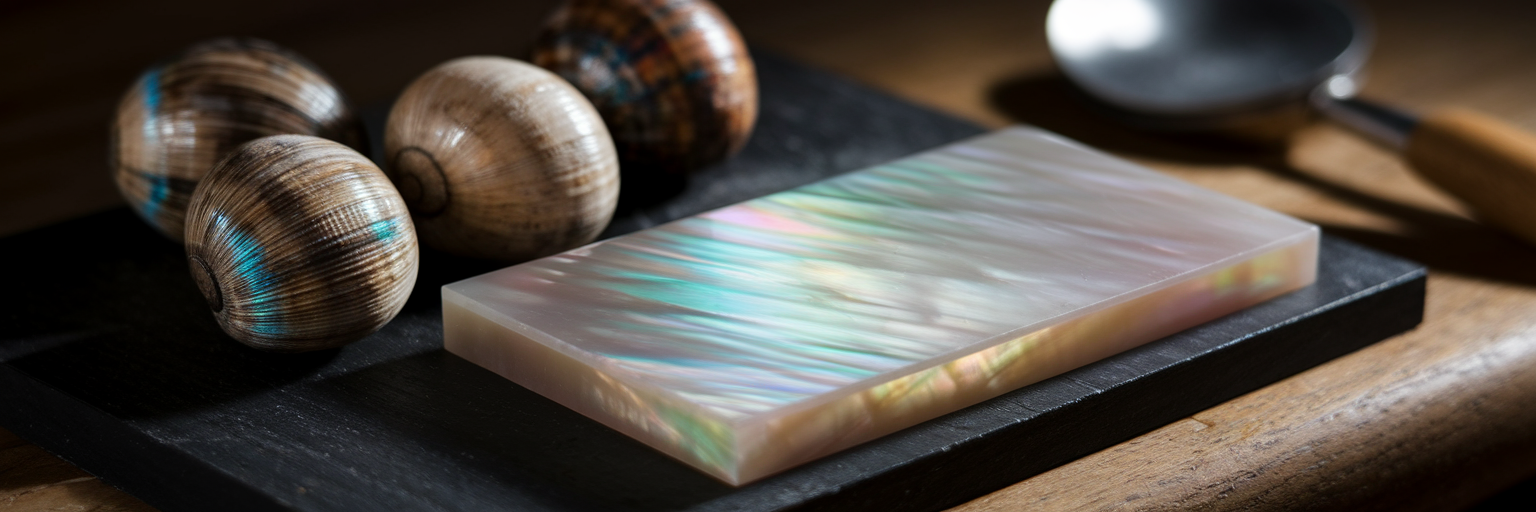
Beyond its visual appeal, the true strength of mother of pearl lies in its composition. To understand why it is an environmentally superior material, we need to look at what it is made of. Nacre is a composite material produced by mollusks, consisting of layers of aragonite, a form of calcium carbonate, held together by an organic protein called conchiolin. This natural makeup gives it a significant advantage over the petroleum-based plastics commonly used for phone accessories.
The most critical difference appears at the end of the product’s life. A conventional case made from polycarbonate (PC) or thermoplastic polyurethane (TPU) will persist in a landfill for centuries, eventually breaking down into harmful microplastics that pollute our oceans and soil. In contrast, a biodegradable phone case made from nacre is designed to return to the earth. It decomposes naturally, leaving no toxic residue behind. This distinction is not minor; it is fundamental to building a less wasteful product cycle.
Furthermore, the energy required to produce these accessories differs dramatically. Plastic manufacturing relies on high-heat injection molding, an energy-intensive process dependent on fossil fuels. Crafting mother of pearl involves low-energy cutting, shaping, and polishing. This lower energy footprint contributes to a more responsible production model. Modern engineering allows us to integrate this natural material into highly protective designs, as seen in products like the Real Mother of Pearl MagSafe Rectangle Case, which combines natural elegance with everyday resilience.
| Attribute | Mother-of-Pearl | Polycarbonate (PC) / TPU |
|---|---|---|
| Material Source | Natural byproduct of the seafood industry | Petroleum-based (fossil fuels) |
| End-of-Life | Biodegradable, returns to the ecosystem | Persists for centuries, creates microplastics |
| Energy Footprint | Low-energy cutting and polishing | High-energy, high-heat injection molding |
| Circularity | Upcycled from a waste stream | Linear model (requires virgin resources) |
This table provides a direct comparison of the lifecycle impacts of mother-of-pearl versus the common plastics used in most phone accessories. Sourcing and end-of-life data are based on established material science principles.
A Circular Model for the Accessory Industry
True sustainability is about more than just using natural materials. It requires rethinking the entire supply chain. The dominant model in the electronics market has long been linear: take resources, make a product, and dispose of it. This approach is inherently wasteful. Mother of pearl offers a compelling alternative by fitting perfectly into a circular economy, where waste is designed out of the system from the beginning.
The nacre used in eco friendly phone accessories is an upcycled byproduct. It is sourced from the shells of mollusks, which are a residual material from the seafood industry. As research from the Mother-of-Pearl Project highlights, utilizing shells from species like Trochus niloticus diverts what would otherwise be waste from landfills and oceans, transforming it into a durable, valuable resource. This is the core principle of a circular system: finding value where others see trash.
This responsible model can be broken down into a few key steps:
- Intelligent Sourcing: We begin by sourcing shells as a byproduct, ensuring no animals are harmed for their shells alone. This turns a waste stream into our primary raw material.
- Durable Craftsmanship: The material is then carefully crafted into long-lasting goods designed to withstand daily use, extending the product's life and reducing the need for frequent replacements.
- Designing for Longevity: Our focus is on timeless design, not fleeting trends. This encourages consumers to keep their accessories longer, moving away from disposable culture.
By adopting this approach, we are not just making a product; we are demonstrating a better way to do business. This commitment to transforming materials and challenging industry norms is central to our story.
Balancing Demand with Ecological Responsibility
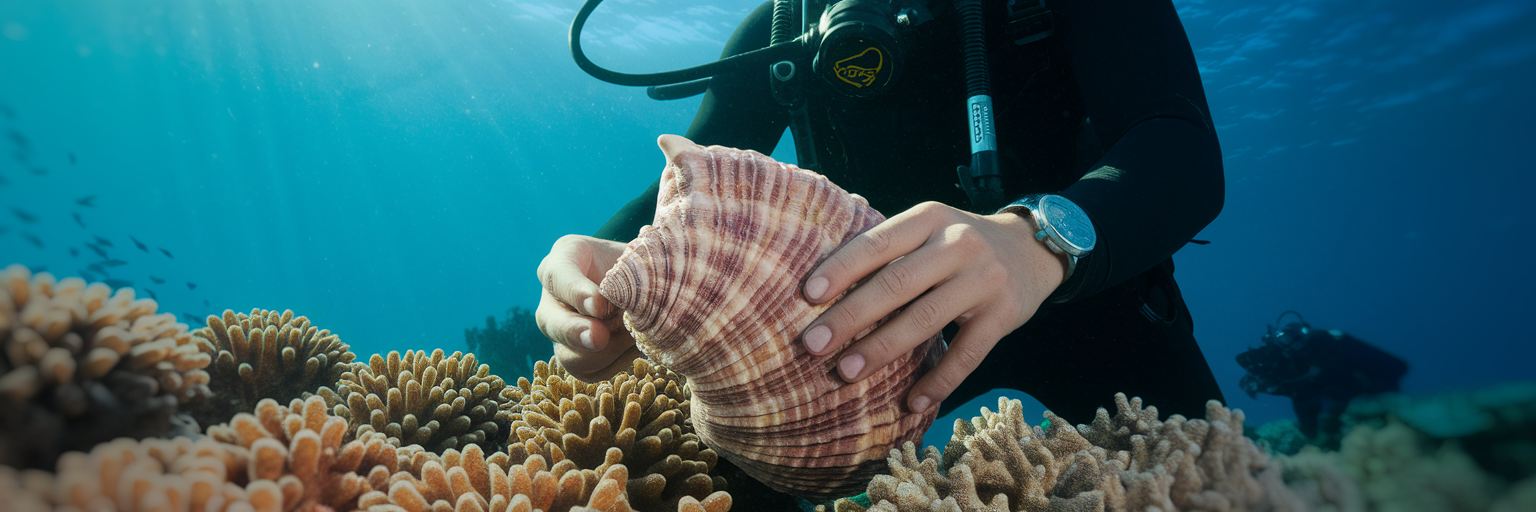
With any natural material, a valid question arises: what happens if demand grows too quickly? It is a concern we take seriously. The integrity of sustainable iPhone cases depends entirely on preventing the very problem they aim to solve. Unchecked demand could lead to over-harvesting, threatening the mollusk populations that produce this beautiful material. Acknowledging this risk is the first step toward responsible stewardship.
The solution lies in a transparent and rigorously managed supply chain. We believe that ecological responsibility is not optional. That is why we align with initiatives that enforce strict protocols for harvesting and animal welfare. These programs work with local communities to ensure that mollusk populations remain healthy and stable, preventing depletion and protecting marine ecosystems. It is a delicate balance, but one that is achievable through diligence and a firm ethical stance.
For consumers, the key is to look for proof. Third-party certifications and clear reporting on sourcing practices are what separate genuinely sustainable brands from those simply using green language. When you choose a product, you should be able to trust that every component has been sourced with care. Ensuring every component is ethically sourced is a priority, especially for our latest collections, such as the iPhone 15 Pro Max rectangle cases. This commitment to stewardship is what ensures mother of pearl remains a truly eco-friendly option for the long term.
The Future of Natural Materials in Personal Tech
The rise of the mother of pearl phone case is more than a trend; it is a signal of a larger shift in consumer consciousness. It represents the convergence of luxury aesthetics, personal individuality, and genuine environmental awareness. For too long, the tech accessory market has been dominated by disposable plastics that offer little in terms of character or sustainability. Materials like nacre prove that we do not have to choose between style and substance.
This movement extends beyond just mother of pearl. We are seeing a growing interest in other natural materials like wood, stone, and innovative biopolymers, all of which offer a tactile and visual richness that synthetics cannot match. These materials connect us to the world around us and allow our technology to feel more human. They remind us that the objects we carry every day can and should have a story.
Ultimately, the choices we make about our accessories are becoming extensions of our personal values. Purchasing a phone case is no longer just a functional decision. It is an opportunity to support a more responsible industry and to carry a piece of art that reflects a commitment to a healthier planet. Materials with a transparent, sustainable story are not just an alternative; they are the clear future of the premium accessory market. As personal accessories become powerful statements of style and values, you can explore more emerging trends on The Style Edit.


